


Join Our Email List!

Engine overheating can cause expensive damage for any fleet or heavy equipment owner. A quick glance might suggest everything is fine. However, a deeper inspection can reveal serious complications, prevent further damage and help your equipment last longer. Fluid analysis protects your engine from corrosion, chemical breakdown and cavitation.
Relying solely on visual coolant checks is risky because many serious issues remain hidden beneath the surface. For example, clear coolant might appear perfectly normal even when it is chemically corrosive. This can damage vital engine components without visible warning signs.
Complications such as pH imbalance or inhibitor depletion can cause equipment failure long before external symptoms show up. Investing in a simple fluid sample is a proactive solution. This cost-effective testing prevents equipment downtime and helps you avoid expensive engine repairs, rebuilds and replacements.
Coolant is much more complex than many equipment owners realize. While it is a necessary mixture that protects your equipment, its breakdown can lead to severe engine damage.
Coolant does more than protect your engine from extreme temperatures. It also prevents cavitation, corrosion and scale. This keeps metal surfaces in good condition and enables proper heat transfer. Coolant maintenance is crucial for engine longevity because of all the protective roles this fluid plays.
The glycol in engine coolant degrades over time, transforming into various organic acids. These corrosive acids attack critical engine components, such as:
Acidic attacks can cause premature wear and component failure, which compromises the entire cooling system. Regular fluid analysis detects this chemical breakdown before it damages the engine.
Cavitation is when rapid coolant pressure changes can cause vapor bubbles to form and violently collapse. This implosion generates powerful shock waves that erode metal and eventually create microscopic holes. As the holes deepen, they penetrate the cylinder liner and let coolant mix with combustion gases or oil.
Cavitation can lead to catastrophic engine failure from the inside out. Preventing this damage is essential for maintaining cylinder integrity.
Galvanic corrosion is an electrochemical process. It occurs when the coolant lets electricity pass through and turns the cooling system into a battery. Different metals in the engine act as electrodes, leading to an electrochemical reaction. This process actively corrodes metal parts, especially those made of softer alloys. Galvanic corrosion can cause premature component failure and compromise your equipment’s cooling system.
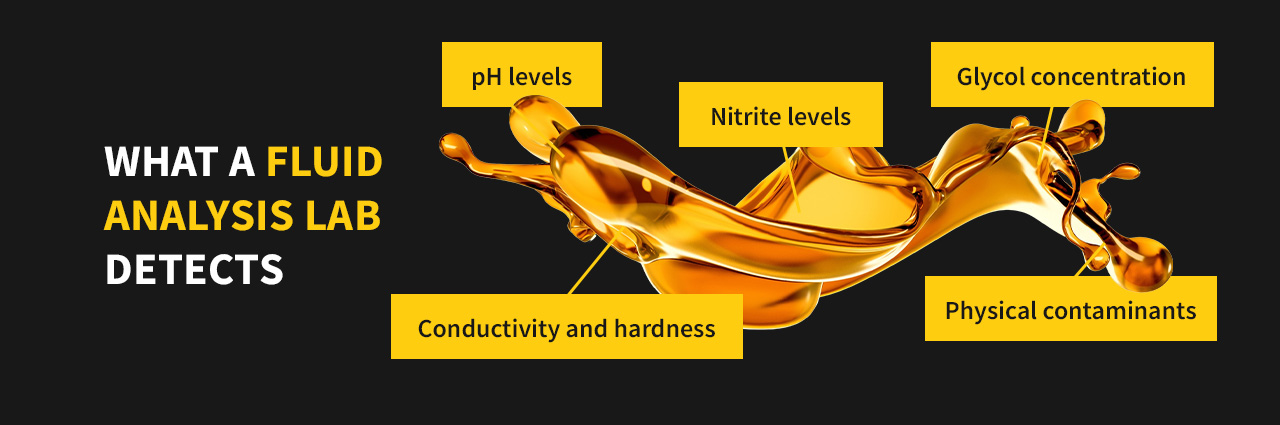
A fluid analysis lab lets you look deeper into your coolant’s condition through these testing parameters:
Fluid analysis reports typically categorize findings into different levels of detail. Insights range from routine checks to advanced diagnostics.
Level 1 analysis encompasses routine checks that are fundamental for proactive maintenance schedules. These basic tests typically evaluate glycol concentration, freeze point and general coolant condition. Level 1 analysis is ideal for regular intervals and during preventive maintenance. It is an excellent early warning system that helps track your coolant’s overall health. This level of analysis ensures your coolant continues to provide essential protection.
When you suspect an existing engine problem or need a deeper look at coolant degradation, level 2 analysis is necessary. This comprehensive analysis level provides advanced diagnostics. It can detect specific organic acids and precisely measure the depletion rates of crucial inhibitors. Level 2 analysis helps pinpoint the exact nature of chemical breakdown. This makes it easier to choose the most effective corrective actions.
Fluid analysis results are often presented in this user-friendly “traffic light” report format:
A proactive coolant analysis program is a straightforward way to extend engine life and prevent costly repairs. Use the following steps to get started:
An effective coolant analysis program relies on consistent sampling. Take a sample during every maintenance interval to create a clear picture of your fluid’s health over time. Adhering to these regular schedules allows you to detect trends and potential issues early. With regular sampling intervals, you can take action before minor problems cause significant engine damage.
Accurate coolant analysis heavily depends on using the proper sampling technique. This is because a contaminated or improperly collected sample can lead to misleading data.
Always take samples from an active stream of circulating coolant. The coolant should be at operating temperature for the most accurate results. Never take a sample from the overflow tank, as this fluid is stagnant and will not reflect the coolant’s true condition. Following these requirements ensures your samples represent the coolant in its operating condition.
Keeping meticulous records allows you to effectively track trends over time. Maintain a consistent history for each asset ID, noting the results of each fluid analysis. This reveals how coolant properties gradually degrade and helps you analyze your engine’s wear patterns. These detailed records help you identify repetitive issues and make better maintenance decisions.
Coolant fluid analysis converts coolant from a consumable liquid into a valuable diagnostic tool. When you move beyond visual checks and embrace scientific analysis, you gain the power to detect invisible dangers. This proactive action protects your investment. It is a great way to minimize downtime and extend your equipment’s operational life.
Foley, Inc. offers expert fluid analysis through our Foley Fluids Lab. We analyze over 150,000 coolant, fuel and oil samples each year, and most results are available the next day. You can order bulk fluid sample kits quickly and easily from our site. Contact us to learn more about our fluid analysis services and how we can help you protect your equipment.
